When you purchase through links on our site , we may earn an affiliate commission . Here ’s how it works .
Nature has an unique ability to enliven , awe and humble us , and 2024 was no exception .
From haunting submerged giant graves to jaw - dropping images of predators catching their prey , here are the most arresting nature photos bewitch in 2024 .

An awe-inspiring look into a fragile phenomenon: Immense swaths of Monarch butterflies (Danaus plexippus) sleeping, clinging in clusters, no doubt weary after having made the 3,000 mile migration from Canada and United States to Mexico. These monarchs make the reserve their home until Spring, and during their stay, they rest, reproduce, and prepare for the long journey back. During this eight-month cycle, it is estimated that five generations of these beautiful butterflies are born and die. In contrast to the sheer enormity of the Monarchs in this image, in reality, sights like this could potentially become rare in the future. This is entirely because of the realities of climate change, deforestation, and pesticide exposure, including an overall loss of the milkweed plant, the only plant in which the Monarch lays their eggs. However, all is not lost, with many organizations in the United States and Mexico mobilizing to save this incredible migratory effort, with promising numbers leading the International Union for the Conservation of Nature classifying this behavior vulnerable as opposed to endangered.
Every autumn , zillion ofmonarch butterflies(Danaus plexippus)migrate nearly 3,000 miles ( 4,800 kilometers ) from North America to southwestern Mexico to hole up over the winter , grant to theNational Museum of Scotland .
PhotographerJaime Rojosnapped this mental image of the butterfly stroke clustered over fir tree Tree in the El Rosario refuge , a UNESCO World Heritage site that ’s dwelling house to many overwinter monarch butterflies . The photograph was awarded the lordly pillage at the eleventh annualBig Picture : Natural World Photographycompetition .
In the tropical wetlands of the Pantanal , in South America , photographerIan Fordcaptured the second a panther ( Panthera onca ) delivered a skull - crushing bite to a yacaré cayman ( Caiman yacare ) .

An awe-inspiring look into a fragile phenomenon: Immense swaths of Monarch butterflies (Danaus plexippus) sleeping, clinging in clusters, no doubt weary after having made the 3,000 mile migration from Canada and United States to Mexico. These monarchs make the reserve their home until Spring, and during their stay, they rest, reproduce, and prepare for the long journey back. During this eight-month cycle, it is estimated that five generations of these beautiful butterflies are born and die. In contrast to the sheer enormity of the Monarchs in this image, in reality, sights like this could potentially become rare in the future. This is entirely because of the realities of climate change, deforestation, and pesticide exposure, including an overall loss of the milkweed plant, the only plant in which the Monarch lays their eggs. However, all is not lost, with many organizations in the United States and Mexico mobilizing to save this incredible migratory effort, with promising numbers leading the International Union for the Conservation of Nature classifying this behavior vulnerable as opposed to endangered.
The image , titled " Deadly bite , " was among the extremely commend image in the 2024Wildlife lensman of the Yearcompetition , developed and produced by theNatural History Museumin London .
link : See a jaguar shatter a crocodilian ’s skull and a ' David Bowie ' spider in this stoolpigeon peak of the 2024 Wildlife Photographer of the Year
Photographer Shane Grosswas award first place in the Ocean Portfolio family in theOcean lensman of the Year 2024competition .

Ian Ford documents the moment a jaguar delivers a fatal bite to a caiman in the Pantanal. A call over the radio alerted Ian that a jaguar had been spotted prowling the banks of a São Lourenço River tributary. Kneeling in the boat, he was perfectly placed when the cat delivered the skull-crushing bite to the unsuspecting yacare caiman.The South American Pantanal wetland supports the highest density of jaguars anywhere in the world. With prey being so abundant, there is no need to compete for food, and the usually solitary big cats have been seen fishing, travelling and playing together. Location: Pantanal, Mato Grosso, Brazil Technical details: Sony α1 + 400mm f2.8 lens; 1/800 at f4 (-1 e/v); ISO 400
In this pic , a bedding of wide-cut - eyed baby plainfin midshipman Pisces ( Porichthys notatus ) balance above golden yolk sacs that are still tie to their bodies .
Photographer Kathleen Borshanian enchant this effigy of an Arctic Charles James Fox pup basking in the Dominicus on the edge of a cliff on an island in the Bering Sea .
The Pribilof Islands Arctic slyboots ( Vulpes genus Lagopus pribilofensis ) is autochthonal to the Pribilof Islands — four volcanic island off the coast of Alaska . The fox in this range lurks near an entrance to one of many tunnel found all over the island . These burrow shape an hugger-mugger labyrinth and cater refuge for these pup , harmonise to the image subtitle .

Baby plainfin midshipman fish, still attached to their yolk sacs.British Columbia, Canada
The exposure was among the finalists in the Terrestrial Wildlife class in the 2024 Big Picture : Natural World Photography competition .
Below the towering tree diagram of a pine orchard , photographerToby Schrapelcaptured a picture of a biofluorescent southerly browned tree salientian ( Litoria ewingii ) roost atop a glow bioluminescent ghost mushroom ( Omphalotus nidiformis ) .
This photo was awarded first place in the People ’s Choice family in the 2024Beaker Street Science Photography Prizecompetition in Australia .
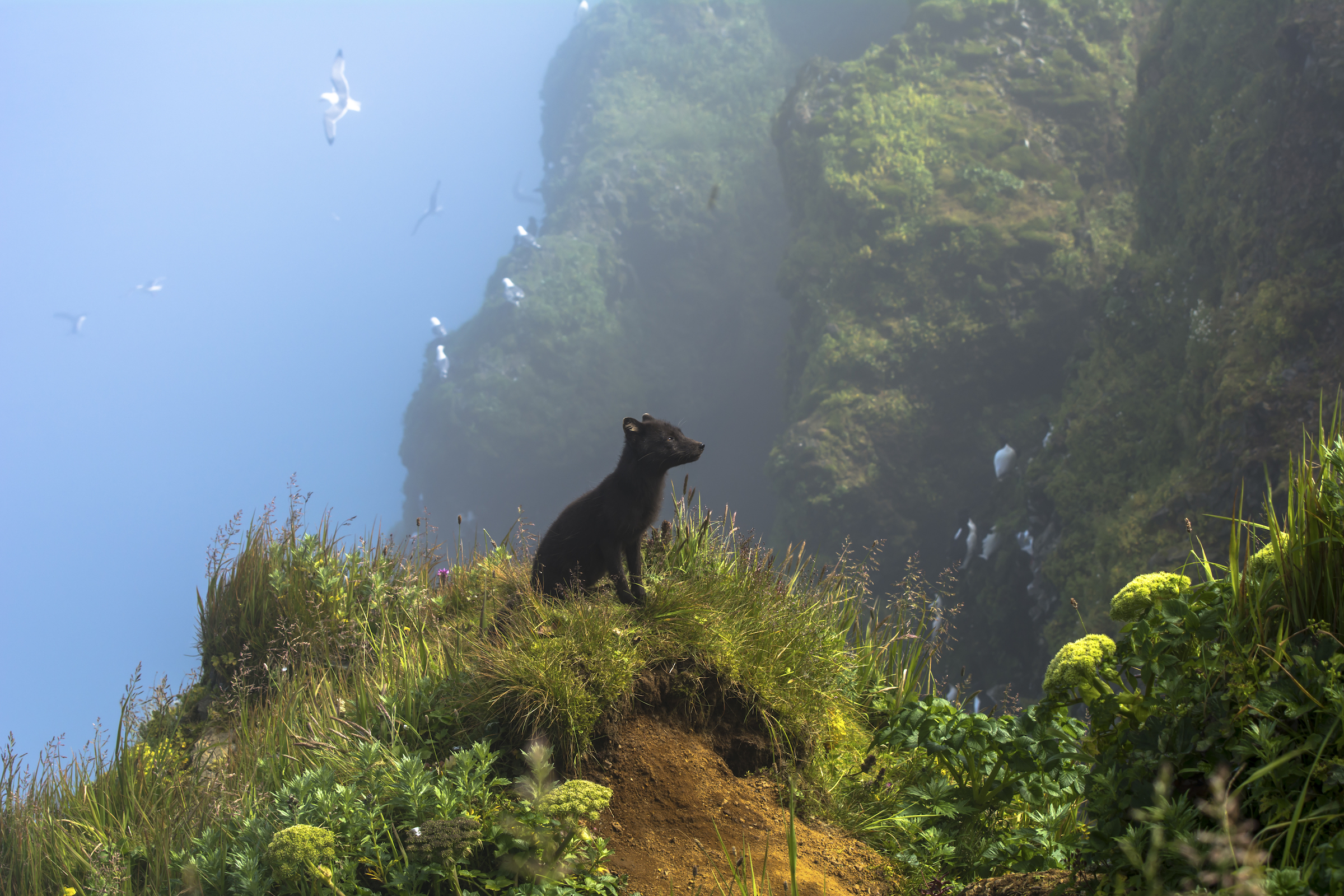
At first glance, this image appears to capture the impossible: A fox pup sitting … underwater? In reality, this fox is basking on a cliffside, likely enjoying a rare moment of sunshine or possibly preparing to hunt on the large bird colonies that nest on the nearby cliffs. This particular pup is a Pribilof Island arctic fox (Vulpes lagopus pribilofensis) and is endemic to the Pribilof Islands, where these beautiful creatures are federally protected.
Related:‘Absolutely magical ' : Rare glowing duo of tree frog and parasitic ghost fungus capture in otherworldly photo
This photograph shows a forensic expert meticulously lift the fingerprints from the tusk of an African elephant ( Loxodonta ) at Heathrow Airport in the U.K.
PhotographerBritta Jaschinskisheds light on the illegal ivory trade that drive the poaching of elephant for their prized tusk . fingerprint on ivory typically blow over within a few hour , but forensic experts have open up a groundbreaking ceremony proficiency that enable investigators to lift fingerprints from tusks more than a calendar month afterward .

Category: Shows a biological conceptMost of you will already know that this is a bioluminescent mushroom, but did you know that the blue glow in the little frog’s eyes and on his body is another type of glow called biofluorescence? This occurs when a living organism has a chemical surface that absorbs light at one wave length and re-emits it at another. There are many things that can fluoresce, including us. A 365 nm torch is your key to entering this magical new world full of wonderful new discoveries, all from asking just one question. “I wonder if it will glow?”.
This image was a finalist in the Human and Nature category in the 2024 Big Picture : Natural World Photography competition .
In this pic , entitle " The Swarm of Life , " a school of westerly salientian tadpole ( Anaxyrus boreas ) swims beneath a dense carpet of lily pads floating in a Canadian lake .
This species is found in a variety of habitats , from southeastern coastal Alaska and British Columbia , Canada , to northern Baja California , Mexico . Female westerly anuran give rise over 12,000 eggs in one clutch , but only1 % typically make it to adulthood .
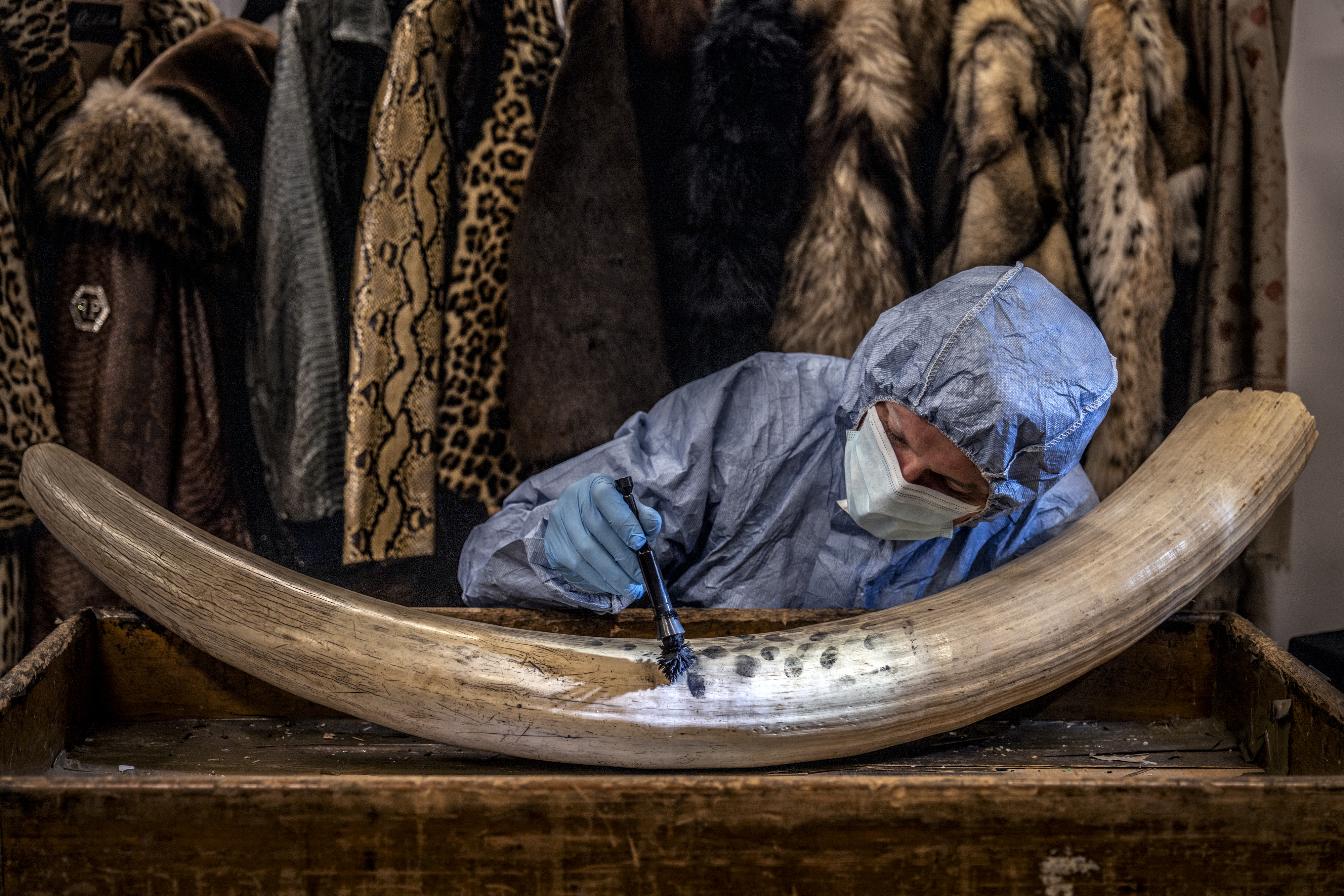
A Metropolitan Police Serious Crime Forensic Expert works to lift fingerprints from the tusk of an African elephant (genusLoxodonta) at Heathrow Airport. These investigators are confiscating smuggled wildlife species and products in increasingly high numbers—with thousands of seizures made in October 2023 alone. WWF estimates on average 40 African Elephants are killed for their ivory every day, making this fingerprinting work integral to law enforcement efforts to track down smugglers running the illegal ivory trade. Though difficult to gain access, this photographer has built a relationship with the CITES Border Force Team, who invite her in to document investigations and subsequent forensic testing, including this newly developed technique using white magnetic powder to reveal older fingerprints.
lensman Shane Gross enchant this photo while snorkeling in a mountain lake on Vancouver Island . The photo was the grand championship victor in the 2024 Wildlife Photographer of the Year competition .
sockeye salmon Salmon River ( Oncorhynchus nerka ) slue around a swimming brown bear ( Ursus arctos)at Katmai National Park in Alaska as the Pisces return from their yearly migration .
In former June , up to40 million adult blueback salmon salmonreturn to Bristol Bay from the open sea , where they have spent around three old age . They swim up the lakes and stream to the spot where they were birthed to lay their own eggs and soon after dice .

Shane snorkelled in the lake for several hours, through carpets of lily pads. This prevented any disturbance of the fine layers of silt and algae covering the lake bottom, which would have reduced visibility. Western toad tadpoles swim up from the safer depths of the lake, dodging predators and trying to reach the shallows, where they can feed. The tadpoles start becoming toads between four and 12 weeks after hatching. An estimated 99% will not survive to adulthood. Location: Cedar Lake, Vancouver Island, British Columbia, Canada Technical details: Nikon D500 + Tokina fisheye 10–17mm f3.5–4.5 lens at 11mm; 1/200 at f13; ISO 640; 2x Sea & Sea strobes; Aquatica housing
The photographer , Barrett Hedges , was a finalist in the People ’s Choice class in the 2024 Big Picture : Natural World Photography competitor .
Under a microscope , an fantastically detailed exposure reveals the beady eyes of a green crab spider ( Diaea dorsata ) .
crabby person spider are known for their distinct colors , which countenance the critter to meld in with the foliage in woodlands across Europe .

In a time of salmon run shortages, an amazing birds-eye view reveals a massive congregation of sockeyes (Oncorhynchus nerka) migrating around a brown bear (Ursus arctos) in Katmai National Park.
Photographer Paweł Błachowiczwas award thirteenth place for this photo in theNikon Small World 2024 Photomicroscopy competition .
Whale graveyard
Beneath the coastal waters of East Greenland , a photographer captured the wasted remains of minke hulk resting in an underwater grave accent .
lensman Alex Dawsontook the trope snug to the Tasiilaq closure , a pocket-size small town that take part in an yearly hunt of the vulgar minke whale ( Balaenoptera acutorostrata ) . The whale are rifle of their meat and dragged back into the sea . Over clock time , their carcass are picked clean by all form of marine animals .
The image , titled " Whale bones , " was awarded the overall prize in theUnderwater lensman of the Year 2024competition .

Eyes of green crab spider (Diaea dorsata).
Related : Eerie photograph capture whales hunted off Greenland lying in their watery grave
Photographer Tracey Lundsnapped this photo of a pair of swimming northern gannet while on vacation in Scotland ’s Shetland islands .
With a wingspan of 5.9 feet ( 1.8 meters ) , northerly Gannets ( Morus bassanus ) are thelargest seabirds in the U.K. They plunk from heights of 98 feet ( 30 1000 ) into the ocean to hunt for fish .

Early this year, an image of minke whale skeletons won the Underwater Photographer of the Year 2024 competition.
" Thousands of gannets were in the sky above us and then start to dive into the ocean after local fish , " Lund said in the photocaption . " An unbelievable spectacle to find , let alone photograph . "
The image won the grand prize in the 2024World Nature Photography Awardsand also took the gold award in the Behavior class .
In this photo , take in theAxel LabatColumbia University , a hold of testis reveal the early growth of the rarefied Caribbean two - spot devilfish ( Octopus hummelincki ) .

A photo of two gannets underwater was awarded the grand prize in the 2024 World Nature Photography Awards.
This entire clump bill around 0.4 column inch ( 1 centimeter ) in diam , according to anInstagram postfrom one of the lensman who seize the image . Within each testis , there are two dark eye ; a small , white yolk sac ; and brownish chromatophores , pigment - containing cells that appropriate octopuses to transfer their visual aspect .
PhotographersThomas BarlowandConnor Gibbonswere awarded 5th place in the Nikon Small World 2024 Photomicrography Competition .
A mahi - mahi ( Coryphaena hippurus ) pee-pee a successful catch during a feeding hysteria in this photo get hold of off the slide of Baja California .

Cluster of octopus (Octopus hummelincki) eggs
" Watching them hunt was mesmerize — their speed and precision were unreal,“photographer Manuel Castellanos RabosotoldOceanographic magazine . " I wanted to catch the moment one broke through the ball with its catch . It remove over 16 hours in the water , finding the right light and slant , but I last receive it . "
The image was grant first lieu in the Wildlife Photographer of the Year family in the Ocean Photographer of the Year 2024 competition .
interrelate : Ocean lensman of the Year 2024 : See stunning photograph of hungry whale , surfing seagull , freaky fish baby , land - sleep together eel and adorable toxic octopus
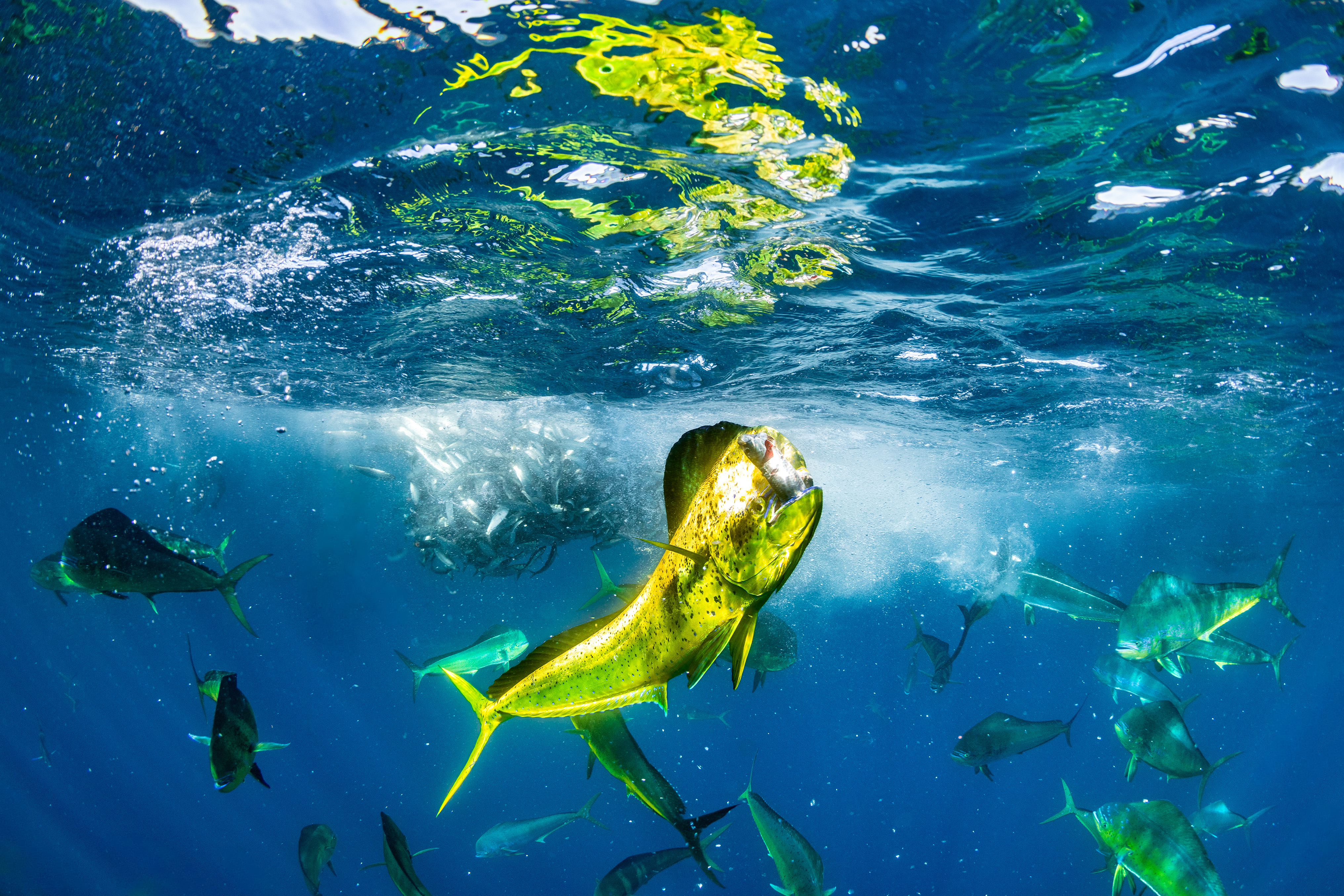
A triumphant mahi-mahi or common dolphinfish proudly displays its catch amidst a feeding frenzy.Baja California Sur, Mexico
This image of a potbelly sea horse shroud behind a unripened coral in the cloudy urine off Sydney landedphotographer Talia Greisfirst place in the Macro category in theUnderwater Photographer of the Year 2024competition .
The potbelly seahorse ( Hippocampus bleekeri ) is one of thelargest seahorse species . They are found along the coast of Australia and New Zealand . They can give 11.8 inches ( 30 centimetre ) in distance , and as the name suggest , grownup potbelly seahorses have very large bellies .
— manlike hunchback whale bilk 3 ocean for sexual practice , unwittingly crack space platter for species

An abstract portrait of a Potbelly Seahorse.
— Large , ghostly white-hot crab - like vulture discovered at the bottom of the Atacama Trench
— ' Mega momma ' large blank shark killed on drumline may reveal enigma about iconic predator
This colorful image shows an emperor moth shrimp ( Periclimenes imperator ) ride on the head of a sea slug ( Hypselodoris apolegma ) that is sitting on its eggs .

This nudibranch is photographed in front of a fire-like background.
Nudibranchs , also known as sea slugs , set their eggs in the shape of a ribbon or sloshed volute .
Photographer Enrico Somogyisnapped this persona off the northeast coast of Bali and was grant first place in the Compact category in theUnderwater lensman of the Year 2024competition .


